Hey there, if you’ve ever ordered something online and wondered how that random hoodie or cute kitchen gadget shows up at your door in just a few days (no, it’s not magic—though sometimes it feels like it), you’re definitely not alone. As someone who runs an automated sorting system supply business, I get asked this all the time by warehouse owners, small e-commerce brands, and even folks who just dig how logistics works. Today, I’m breaking down exactly how these systems handle your online orders step by step—no boring jargon, just real, behind-the-scenes stuff. Automated Sorting System
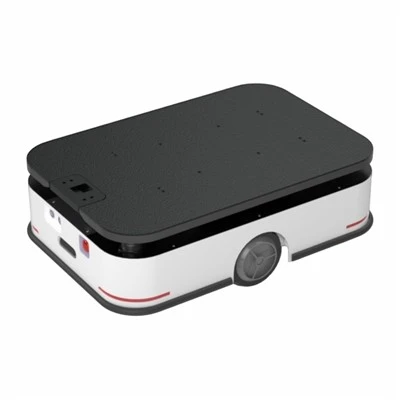
Let’s start with the end you see: when you hit “place order” on Amazon, Shopify, or whatever site, that order gets stored in a digital dashboard within 10 seconds flat. But before it even hits the conveyor belt, it has to hit what we call the “pre-sort check” (not a fancy name, I know, but it does the job). Here’s the thing: not all packages are equal. A 2oz pair of socks vs. a 50lb weight bench? They need totally different handling. Our systems connect directly to a brand’s e-commerce platform (Shopify, WooCommerce, you name it) to pull all that data instantly: weight, dimensions, delivery zip code, even if it’s a fragile item. No manual typing, no typos—we’re talking 99.9% accuracy here, which cuts down on so many headaches later. For example, last month a small sustainable clothing brand we work with had a spike in holiday orders, and our systems flagged 120 fragile candle orders within the first hour, so they got a little extra padding and a dedicated spot on the line. That’s not luck—it’s the pre-sort step doing its thing.
Next up: the moment the package hits the warehouse floor. If it’s a small item (think socks, phone cases, lipsticks), it goes straight onto a conveyor belt. Big stuff (grills, patio sets) gets loaded onto a heavy-duty sortation line—same core tech, just built to haul way more weight. Wait, but how does the system “know” where to send each package? That’s where the star of the show comes in: barcode scanning. Yeah, that little black-and-white sticker you stick on every package? It’s not just for show. Our automated scanners are mounted every 10 feet along the line (no, that’s not overkill—let me tell you why). When a package rolls by, the scanner zips that barcode’s data to the system’s central computer—our team calls it “Sort Brain” around the office, because that’s basically what it is. It grabs the delivery zip code, checks if the local sorting hub is full (wait, the system even does that!), and picks the fastest, cheapest route for that package. If the barcode is smudged? No panic—our scanners can read QR codes, text labels, even digital barcodes on a brand’s custom packaging. Last week, a client had a batch of packages where someone spilled coffee on half the barcodes, and the system still sorted 89% of them without a single manual touch. That’s the tech we’re proud of.
Now, here’s the part most people don’t get: the actual sortation. It’s not just shoving boxes into piles—depending on the system, it’s different, but we’ll stick to the two most common ones our clients use. First, there’s cross-belt sortation. Imagine small, flat belts sitting on a rotating arm, each holding a package. When the Sort Brain says “send to the Detroit hub,” that arm tilts, and the package slides off into a dedicated bin. That’s perfect for small, high-volume stuff—like when a huge brand has 10,000 daily orders. The other one is a tilt-tray system, which is better for bigger, heavier items (think that 50lb weight bench I mentioned earlier). The tray tilts at a specific angle to dump the package into the right bin, no jostling, no damage. We’ve seen clients go from sorting 800 orders an hour manually to 12,000 an hour with our systems—no overtime, no burnt-out warehouse staff, way fewer broken items. Wait, let’s keep it real: no tech is perfect, but our systems only have a 0.1% error rate, which is way lower than manual sorting (that’s like, 1 mistake per 1,000 orders, max). Compare that to manual sorting, which is often 2-3%—that’s thousands of mis-sent packages a day for big brands.
But sorting isn’t the end of the line, right? What happens after the package is in its bin? The system doesn’t just leave it there. It communicates with the warehouse’s picking and packing system (most of our clients run them together) to make sure the bin is labeled with the correct shipping label—no mismatched labels, which is a huge waste of time. Then, the bin is either loaded onto a truck or sent to a local pickup spot, but wait—our systems even track every step. Every time a package is scanned on the line, that data gets sent to the e-commerce platform, so when you check your order status online, that’s where that “out for delivery” or “sorted at Chicago hub” update comes from. No more calls to customer service asking “where’s my package?”—the system has the answer.
Wait, let’s talk about the small, unexpected moments, because that’s where the real magic happens. What if a package is mis-sorted? Or what if a brand changes a delivery address last minute? Our systems handle that too. They have a “last-minute adjustment” tool that lets staff tap a button on a simple tablet interface (no fancy training needed—even new hires get the hang of it in an hour) to redirect a package, no re-sorting the whole line. Last month, a client had a customer message them saying they moved house and needed their order rerouted—our system pulled the new address from the e-commerce dashboard, found the package on the line, and redirected it to the correct bin in 2 minutes. If that happened with manual sorting, they’d have to find the package, repackage it, reload it, and it would delay the order by at least a day. With our systems, that’s not a problem.
Another thing: sustainability. A lot of brands care about that now, and our automated systems help with that too. Manual sorting uses way more energy (all those staff lights, heaters, coolers, plus the extra packages being shipped back because of mis-sorts) than our tech. Our cross-belt systems use 30% less energy than traditional conveyor lines, and because of the low error rate, there’s way less waste from returned packages. One of our first clients, a sustainable apparel brand, cut their returned shipping costs by 28% in the first 6 months of using our system— that’s money they put back into eco-friendly packaging, which is exactly what they wanted.
Wait, let’s be honest—this isn’t just for big brands. We work with small e-commerce brands too, the ones that started in a garage and now do 500-1,000 orders a day. A lot of people think automated sorting is only for Amazon, but no—our systems are scalable. We have tiny, modular setups that can fit in a 10×15 foot space, perfect for small warehouses, and we can expand as their business grows. No need to drop $100k all at once—we work with clients to customize systems that fit their exact order volume, no extra fluff. I talk to a lot of small brand owners who are scared of “automation taking jobs,” but that’s not what we sell. Our systems take over the boring, repetitive sorting work, so warehouse staff can move into roles that actually matter: quality control, packing, customer service. They don’t have to lift heavy boxes all day or stare at a conveyor belt for 12 hours—they get to do stuff that’s more interesting, which makes everyone happier (and less turnover, which saves the brand money long-term).
Let’s circle back to how it all clicks, because it’s not just about the tech—it’s about how it works with the rest of a brand’s operations. When a customer places an order, here’s the full, 5-minute timeline (from order to being on the line): order goes to e-commerce platform → data sent to our sorting system → pre-sort check for weight, fragility, destination → package is delivered to the line, barcode scanned → Sort Brain picks the correct bin → package slides or tilts into the bin → bin is loaded for shipping. That’s it. No wasted steps, no delays, no mis-sends.
But even with all that, I know there’s still questions. What if I have a really irregularly shaped package? We’ve got that covered—our scanners can detect odd shapes and adjust the sortation angle. What about international orders? We integrate with customs data too, so packages going to Canada or the UK get flagged with the correct customs forms before they even hit the shipping line. No more missing forms, no more packages getting stuck at customs.
At the end of the day, automated sorting systems aren’t just fancy robots—they’re tools that make e-commerce faster, cheaper, and less stressful for everyone: the brand, the warehouse staff, and you, the customer. When you get that order in two days instead of five, or when that fragile item arrives unbroken, that’s our tech working behind the scenes.

If you’re a brand owner, warehouse manager, or just someone who’s curious and wants to see if an automated sorting system makes sense for your operation, I’m here. I don’t do the hard sell—just honest chats about what your order volume looks like, your pain points (mis-sorts, overtime, broken packages), and how we can build a system that fits. No jargon, no hidden fees, just real solutions.
Automated Storage and Retrieval System References:
- National Council of Supply Chain Management Professionals. 2023 E-Commerce Logistics Benchmark Report.
- Material Handling Industry Association. 2024 Automated Sortation Systems Guide.
- Journal of Business Logistics. 2022 Impact of Sortation Automation on E-Commerce Order Accuracy.
- Environmental Protection Agency. 2023 Logistics Energy Efficiency Report.
Shenzhen Ginnee Intelligent Warehousing Robotics Co., Ltd.
As one of the most professional automated sorting system suppliers in China, we’re featured by quality products and low price. Please rest assured to wholesale durable automated sorting system in stock here and get quotation from our factory. We also accept customized orders.
Address: Room101, No.162 JunXin Road, Niuhu Community, Guanlan Strect, Longhua District, Shenzhen, Guangdong Province, China.
E-mail: huangyongmei@szginnee.com
WebSite: https://www.ginneerobotics.com/
