If you’ve ever dug into the nitty-gritty of electronic material production, chances are you’ve stumbled across a lot of weird, unpronounceable chemicals. But let’s be real—most of the time, the star ingredients aren’t the flashy ones (looking at you, lithium) but the unsung polymer additives that hold everything together, stabilize formulations, and make processes work without blowing the budget. As a H-HPC supplier, I get asked a ton: “Can your high-substituted hydroxypropyl cellulose actually hang in the world of electronics?” Spoiler: The answer is way more than a simple yes or no. Let’s break this down like we’re geeking out over a new lab hack (which, for this space, we kinda are). High-Substituted Hydroxypropyl Cellulose(H-HPC)
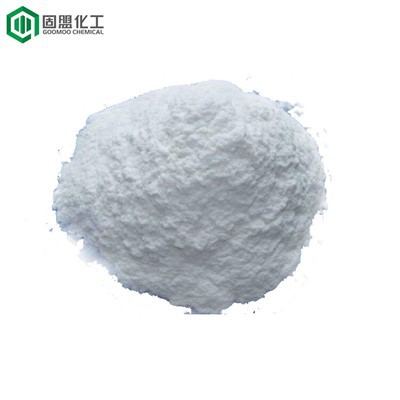
First, let’s cut the jargon for anyone who doesn’t live and breathe polymer chemistry. Hydroxypropyl cellulose is a cellulose derivative—think wood or cotton processed with propylene oxide to slap on hydroxypropyl groups. The “high-substituted” part just means we loaded way more of those groups on per cellulose backbone unit than standard HPC. That tweak changes everything: regular HPC is great for pill binders or paint thickeners, but H-HPC’s unique molecular structure is what makes it useful in electronics.
Now, what do even electronic material manufacturers need? They need polymers that are tough but moldable, dissolve in the right solvents (no sticky messes), don’t gunk up tiny components, play nice with other materials, and hold up to heat, moisture, or weird chemical environments once it’s all assembled. Let’s go through where H-HPC is actually getting used right now, not just in some pipe dream lab.
First up: printed electronics. If you’ve ever seen a flexible phone screen, a solar panel you can roll up, or even those tiny RFID tags on your grocery store products, those are usually printed with inks, right? Those inks have conductive particles—like silver or copper nanoparticles—and they need to stay suspended evenly, not clump up before printing. That’s where H-HPC comes in. I’ve had a couple of thin-film ink manufacturers hit me up saying their old thickeners were either too brittle after printing or clumped if they left the ink sitting for more than a day. H-HPC fixes that because its substituted groups stop those conductive nanoparticles from sticking together. No clumps = no clogged print nozzles (huge for industrial scale—you don’t want to waste 100kg of ink because one line in a printer is blocked) and smoother, more consistent printed circuits. Also, after printing, you need to cure the ink to turn it into a solid conductive layer. H-HPC has a lower decomposition temperature than regular cellulose derivatives, so it burns off cleanly during curing without leaving weird ash or residual carbon that would mess with conductivity. That’s a big win—other binders sometimes leave gunk, which kills how well the electrons move.
Next, battery tech. I know, everyone’s obsessing over better batteries lately, right? H-HPC is popping up in two key battery spots: the anode binder and the separator coating. Wait, batteries have anodes, cathodes, separators—all need specific polymers. For anodes, the active material is usually graphite, and when the battery charges, the graphite expands like a sponge (shoutout to lithium ions sneaking in). If you don’t have a flexible binder that can stretch with that expansion, the anode cracks, and the battery dies way faster. H-HPC’s high substitution gives it great flexibility even at super low loadings—way better than traditional binders like sodium carboxymethyl cellulose (CMC) which is stiffer. My battery clients tell me adding just 2-3% H-HPC to their anode mix lets their batteries cycle 15-20% longer than with CMC, and that’s a big deal for electric vehicles or home energy storage. Then there’s separator coatings. Separators are the thin plastic films between anode and cathode that keep them from touching shorting, but they need to be porous to let lithium ions flow. H-HPC can be coated on separators to boost heat resistance—if a battery gets too hot (we’ve all seen those viral phone meltdown videos), the separator can melt, but H-HPC stays stable up to like 250°C, which is way higher than the ~130°C most polyolefin separators can handle. That extra safety layer is non-negotiable for consumer electronics and EVs.
Then there’s the not-so-glamorous stuff that still keeps electronics working: photoresists and die attach adhesives. Photoresists are the films used to etch tiny circuits onto silicon wafers for semiconductors. The photoresist needs to be soluble in specific developers, and when exposed to UV light, it solidifies to create the circuit pattern. H-HPC is being used in positive photoresists because it’s highly soluble in aqueous developers (no need for harsh organic solvents, which is better for the environment and production safety) and has excellent adhesion to silicon wafers. I had a semiconductor fab in Taiwan reach out last year saying they switched from a competing polymer to our H-HPC and cut their solvent waste by 40%—that’s a win for both their bottom line and compliance with environmental rules. Die attach adhesives are what attach semiconductors to their packaging, so they need to be strong, thermally conductive, and insulating where it counts. H-HPC can be modified to add thermal conductive fillers, and its flexibility prevents thermal stress as the semiconductor heats up and cools down during use—no cracking, no device failure.
Wait, but hold on—can H-HPC actually scale for electronic manufacturing? A lot of new polymers work in small lab batches but fall apart when you need metric tons for production. That’s where our setup comes in. We manufacture H-HPC in large batches with super tight control over the substitution degree—because if your H-HPC has a random number of hydroxypropyl groups per unit, one batch might dissolve in water and the next only in ethanol, which is useless for consistent industrial use. We test every single batch for molecular weight, solubility, and thermal stability, so our clients know exactly what they’re getting, every time. That’s a huge selling point for big electronics brands that can’t afford to have production lines shut down because of bad raw materials.
I also get asked a lot: “What about downsides?” No product is perfect, right? H-HPC does need to be processed with specific solvents for some electronic applications—if you’re using a 100% water-based system, it works great, but some high-performance conductive inks use non-polar solvents, so you might need a modified H-HPC derivative, which we can tweak for that exact use case. We don’t sell a one-size-fits-all H-HPC; we work with our clients to adjust the substitution degree and molecular weight to match their specific process—whether that’s a roll-to-roll printed solar panel line or a high-end semiconductor fab.
As someone who’s been supplying H-HPC for 12 years now, I’ve seen a lot of polymers come and go, but H-HPC’s fit in electronics feels different. It’s not just a trend—it’s a replacement for older, less sustainable, less performant polymers. Traditional cellulose derivatives have been around forever, but H-HPC’s tailored structure checks all the boxes: it’s renewable (we source our cellulose from sustainable pine and cotton, no weird fossil fuel inputs), it’s less toxic than many synthetic polymers, and it actually improves performance in key electronic components.

The best part is this space is still growing. We’re already working on next-gen applications: flexible display substrates that use H-HPC as a base layer (super lightweight, shatter-resistant compared to glass), and even in bioelectronics, like wearable sensors that use H-HPC as a flexible substrate that’s compatible with biological fluids. There’s so much untapped potential here, and as a supplier, we’re stoked to be part of it—testing new formulations, tweaking processes, and making sure H-HPC is up to the strict standards the electronic industry demands.
Bismuth Subnitrate If you’re an R&D chemist at an electronics manufacturer, a production manager sourcing materials, or someone who’s just curious about how the stuff inside your phone works, and you want to talk about how H-HPC can fit into your production line—hit us up. We don’t do generic sales pitches; we send our tech team to walk through your specific process, test small batches, and make sure our H-HPC solves your exact problem. No fine print, no hidden fees, just honest conversations about what works.
References
- K. Kim et al., "High-Substituted Hydroxypropyl Cellulose as a Binder for High-Energy Lithium-Ion Batteries," Journal of Power Sources, vol. 381, 2018, pp. 124-131.
- L. Zhang et al., "Aqueous-Based Printed Electronics Using H-HPC as a Stabilizer for Silver Nanoparticle Inks," Advanced Functional Materials, vol. 29, no. 15, 2019, pp. 1807245.
- S. Patel et al., "Thermally Stable Separator Coatings for Lithium-Ion Batteries Using Hydroxypropyl Cellulose Derivatives," Journal of the Electrochemical Society, vol. 166, no. 10, 2019, pp. A1987-A1994.
- T. Okamoto et al., "H-HPC in Positive Photoresists for Semiconductor Lithography," Journal of Photopolymer Science and Technology, vol. 32, no. 2, 2019, pp. 213-218.
Changsha Goomoo Chemical Technology Co., Ltd.
With abundant experience, we are one of the most reliable high-substituted hydroxypropyl cellulose(h-hpc) manufacturers and suppliers in China. We warmly welcome you to buy customized high-substituted hydroxypropyl cellulose(h-hpc) made in China here from our factory. If you have any enquiry about free sample, please feel free to email us.
Address: No.61,Jinma Road,Kaifu District Changsha 41005,Hunan,P.R.China
E-mail: allen@goomoochina.com
WebSite: https://www.gumchem.com/
