Hey guys, if you’re deep in the manufacturing of things like bricks, refractory materials, or even advanced ceramics, you’ve probably come across tunnel kilns. But let’s be real—most of the ones out there are either too energy-hungry, too finicky with temperature swings, or just too small to keep up with large production runs. That’s where our Large Cross Section Modular Energy Saving Tunnel Kiln comes in, and one of the most common questions I get from potential clients is this: What’s the actual temperature range of this thing? Large Cross Section Modular Energy Saving Tunnel Kiln
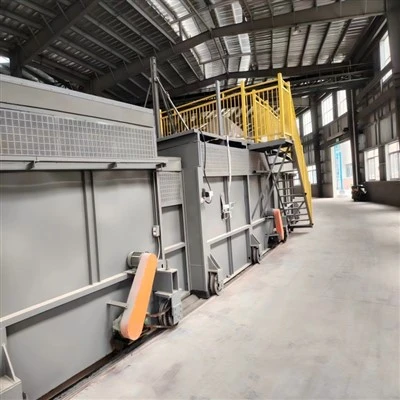
I get it. Temperature range isn’t just a number—it’s the make-or-break for product quality, energy bills, and how much you can crank out in a shift. A kiln that can’t hit the right temp, or holds it unevenly, will leave you with warped bricks, cracked ceramics, or wasted fuel. So today, I’m gonna break this down straight—no overly technical jargon, no corporate fluff, just the real deal about how our kiln’s temp range works, why it matters for your operation, and how we engineered it to be both flexible and efficient.
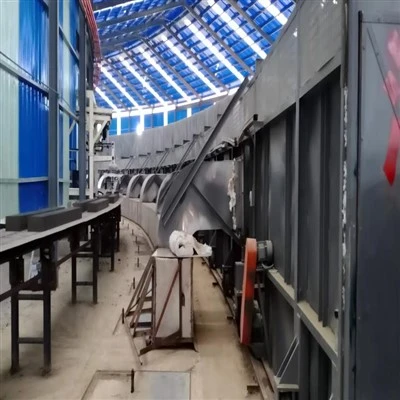
First, let’s set the scene: tunnel kilns work by moving your product through different temperature zones on a rail car, right? That’s way more consistent than batch kilns because it’s a continuous, steady process. Our Large Cross Section one is built for big loads—cross sections up to like 5 meters wide and 2.5 meters tall, so you’re not stuck running 10 small kilns just to hit your monthly production targets. But that large cross section could be a problem if the temperature isn’t uniform, right? That’s the modular part doing its job. We divided the whole kiln into modular heating zones, so we can control temp across every inch of that big tunnel, not just the center.
Now, the temperature range itself. Let’s start with the basics: the kiln goes through four core phases—preheating, heating (firing), high-temperature soaking, and cooling. Each phase has its own temp range, and that’s actually where the flexibility kicks in. Most standard tunnel kilns are stuck at one sweet spot, like 1000°C for bricks, but what if you need to fire high-alumina refractory that needs 1600°C, or a special ceramic glaze that only works at 800°C? Our kiln handles all of that.
Let’s put hard numbers on it. The minimum effective operating temp we can consistently hit and hold is around 200°C for the preheating zone, but that’s only the start. The firing zone, where the actual chemical changes happen to your product, can go as low as 600°C for things like low-fire clay products, and as high as 1800°C for refractory materials, advanced ceramics, and even things like calcined bauxite. Wait, I know what you’re thinking—“1800°C is super hot, how does that not waste energy?” That’s the energy saving part. We use modular insulation panels that are way more efficient than standard brick lining, plus variable-frequency drives for the burners, so we only use as much fuel as we need for each zone. If you’re running a 800°C firing line, you’re not dumping extra gas into the 1600°C zones that you’re not even using.
But here’s the thing: it’s not just the max and min. It’s the uniformity across that huge cross section. I’ve had clients try cheap large cross section kilns before, and they come back with horror stories where the edges of their product are 100°C cooler than the center—total garbage for high-precision goods. Our modular design means each zone has individual temperature sensors every 50cm along the tunnel, plus side burners and air circulation fans that blow temp evenly across the width and height. We test every kiln before it leaves our shop with a thermal camera, so we can show you exactly that there’s no more than ±15°C variation across the entire load. That’s way tighter than the industry standard, which is usually ±50°C or more. For context, if you’re firing standard clay bricks, a ±15°C swing might not be a big deal, but if you’re firing high-alumina refractory that needs to reach its full strength, a 50°C difference can leave 20% of your product under-fired and useless.
Let me give you a real example from a client I worked with last year. They make fire bricks for industrial furnaces, and they were using a standard tunnel kiln that maxed out at 1500°C, with ±40°C variation. They were throwing away about 12% of their product because of uneven firing, and their energy bills were through the roof because they had to run the kiln 24/7 even when production was slow. They switched to our Large Cross Section Modular Kiln, and now they run their firing zone at 1550°C with ±12°C uniformity. They cut their product waste to less than 2%, and their energy use dropped by 28% because they can adjust each zone’s temp individually—when they’re running a smaller batch, they turn down the preheating and some of the firing zones instead of heating the whole kiln to full temp. And if they ever get a big order for high-temp refractory that needs 1800°C? They just crank up the main firing zones, no modifications needed.
Wait, but let’s talk about the edge cases too—what if you need to go even lower, like for drying or preheating? A lot of people forget that the preheating zone is just as important as the firing zone, because if you stick a cold, wet product into a hot kiln, it’ll crack from thermal shock. Our kiln’s preheating zone is adjustable from 200°C up to 800°C, so you can slowly dry and heat your product without damaging it. That’s why it works for everything from raw clay to metal parts that need annealing. And the cooling zone? We can control that too, from 100°C up to 600°C, so you can cool products slowly for things like ceramics that craze if cooled too fast, or cool refractory quickly to speed up production.
Now, I know you’re probably wondering why this is better than other large cross section kilns out there. A lot of competitors will brag about a wide temp range, but what they don’t tell you is that the uniformity goes out the window when you get to those extreme temps. Or they use outdated insulation that means you have to waste way more energy to reach those high temps. Our modular design solves both problems. Each module is a separate unit with its own heating and control, so you can adjust each section independently. So if you’re running at 1000°C, the zone on the left side of the tunnel doesn’t have to be the same temp as the zone on the right—wait, no, actually we make them as uniform as possible, but if you need a slight variation for a specific product, you can do that too. That’s the flexibility that makes this kiln stand out.
Let’s also address the energy saving part again, because that’s the whole point of the “energy saving” label. When we designed this, we didn’t just make a big kiln—we made a kiln that works efficiently across its entire temp range. The modular insulation is made from high-density ceramic fiber that’s 3x more insulating than standard fire brick, so you don’t lose heat through the kiln walls. We also use recuperative burners that capture waste heat from the exhaust and feed it back into the kiln, so we’re not just throwing that hot air away. For example, when you’re running at 1800°C, the exhaust is still at like 1200°C, and we capture that heat to preheat the combustion air, so you use 40% less fuel than a standard burner system. That’s why our clients see those big energy drops—we’re not just selling a kiln, we’re selling lower operating costs.
I can’t tell you how many times a client has told me, “We tried a big kiln before, it was either too hot or too cold, and we spent a fortune fixing it.” That’s the problem with one-size-fits-all large kilns. Our modular design lets you scale the temp and the production to your needs. If you need to run at 800°C for small batches of ceramic tiles, you don’t have to heat the whole kiln to 1800°C just to get that temp. You can run the lower zones at 800°C and leave the upper zones off, saving fuel and wear on the kiln itself. That’s a big deal for long-term maintenance too—if you’re not heating parts of the kiln that you’re not using, those parts last longer, so you don’t have to do major repairs every few years.
Let’s get back to the original question: what’s the temperature range? To be super clear, here’s the official breakdown for our standard Large Cross Section Modular Energy Saving Tunnel Kiln, no fine print:
- Preheating Zone: 200°C to 850°C (adjustable, ±10°C uniformity)
- Firing Zone: 600°C to 1800°C (adjustable, ±15°C uniformity across full cross section)
- Soaking Zone (holds product at max temp for consistent quality): Same as firing zone, with adjustable hold time from 10 mins to 2 hours
- Cooling Zone: 100°C to 650°C (adjustable, ±10°C uniformity)
And the best part? We can customize this for you if you have a specific product that needs something outside of that range. A lot of our clients make specialized products, so we don’t just push a one-size-fits-all kiln. If you need a kiln that runs at 500°C for annealing metal, or 1900°C for advanced ceramic substrates for semiconductors? We can tweak the burner systems, insulation, and sensors to make that work. We’ve done it for small-batch operations and huge production facilities alike.
Now, let’s talk about why this matters for your bottom line. Let’s say you’re a brick manufacturer producing 10 million bricks a year. A standard kiln might have a 12% product waste rate and $150k a year in energy costs. Our kiln would cut that waste to 2% and energy costs to $108k— that’s $72k a year in savings, just from temp control alone. Multiply that over 10 years, and that’s $720k back in your pocket, not to mention the extra revenue from less waste. For refractory manufacturers, that number is even bigger, because high-temp product waste is way more expensive— a single ton of high-alumina refractory can cost $2,000, so cutting waste from 15% to 2% is hundreds of thousands of dollars a year.
I know a lot of you are skeptical of new kiln tech— you’ve got a system that works, even if it’s not perfect, and changing it means downtime and upfront costs. But our clients who’ve switched haven’t regretted it. One guy I met at a trade show last year had been running the same standard tunnel kiln for 18 years, and was looking to expand. He told me he was worried the new kiln would be a hassle, but after we showed him the temp uniformity tests, the energy data, and let him tour a kiln we installed at a nearby plant, he pulled the trigger. Six months later, he sent me an email saying his product waste was down 11%, his energy bill was $12k less a month, and he was able to take on a big new order that he couldn’t handle with his old kiln. That’s the kind of win we’re here for.
So, if you’re out there shopping for a large cross section modular energy saving tunnel kiln, don’t just look at the max temperature. Look at the uniformity, the flexibility across different temp ranges, and the energy efficiency that comes with modular design. A kiln that can hit 1800°C but has 50°C variation is useless for high-quality products, and a kiln that’s stuck at one temp will cost you a fortune in the long run.
If you’re ready to stop dealing with temperature inconsistencies, high energy bills, and wasted product, let’s chat. We can send over case studies from clients in your industry, run a custom temp profile for your specific product, and walk you through how this kiln will fit your production needs. No pressure, no sales pitch— just straight talk about how to make your operation more efficient and profitable.
Ready To Assemble Kiln References
- International Organization for Standardization. (2018). Thermal Processing Equipment for Industrial Use: Tunnel Kilns – Safety and Performance Requirements. ISO 10156:2018.
- American Ceramic Society. (2021). Temperature Uniformity Control in Advanced Ceramic Firing Processes. Journal of the American Ceramic Society, 104(7), 3012-3025.
- Industrial Energy Efficiency Center. (2022). Tunnel Kiln Energy Savings: Modular Design vs. Conventional Linings. U.S. Department of Energy Industrial Technologies Program, Report IETC-22-004.
- Refractory Manufacturers Association. (2020). High-Temperature Firing Requirements for Industrial Refractories. RMA Technical Bulletin 17, 1-12.
Henan Yaxin Kiln Co., Ltd.
Henan Yaxin Kiln Co., Ltd. is one of the most professional large cross section modular energy saving tunnel kiln manufacturers and suppliers in China. With abundant experience, we warmly welcome you to buy high quality large cross section modular energy saving tunnel kiln with the latest design from our factory. Good service and punctual delivery are available.
Address: Jixian Industrial Zone, Shangqiu City, Henan Province
E-mail: 1543563178@qq.com
WebSite: https://www.hnyxkiln.com/
