If you’ve ever driven through a rural or semi-rural area in the last 15 years, you’ve probably glanced at a tall, lattice-structured tower painted in muted greens or grays, often tucked between a stand of pine trees or at the edge of a small industrial park. That’s likely an Angel Communication Tower—and for years, I’ve been one of the people building, maintaining, and supplying these structures to companies across the globe. I get asked a lot of questions: How do they differ from regular telecom towers? Are they more reliable? And the one I’m most interested in lately: Is the Angel Communication Tower well-known internationally? The short answer is yes, but not in the way most mainstream tech or construction brands are known. It’s a quiet, workhorse kind of recognition—built on decades of performance in regions where telecom infrastructure gaps are most acute, and tailored to solve problems that standard towers can’t. Angel Communication Tower
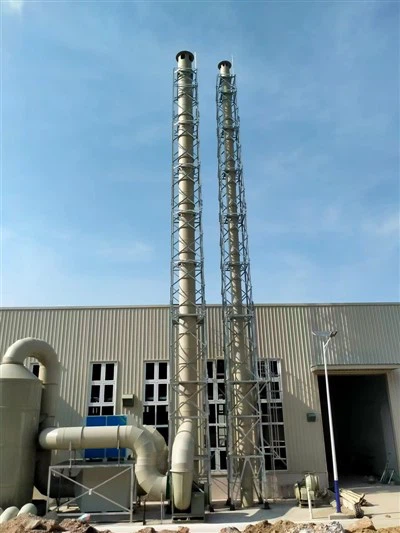
Let me start with how Angel Communication Towers came to be, because that backstory is key to their reputation. Back in the early 2000s, when 2G was rolling out in Southeast Asia, parts of sub-Saharan Africa, and rural Central America, telecom companies faced a consistent headache. Standard steel monopoles or guyed towers were expensive to ship, hard to assemble in remote areas, and prone to swaying during monsoons or heavy seismic activity. Angel Communications, a then-specialized infrastructure firm, set out to design a tower that addressed those pain points. The result was a modular, galvanized steel structure with a unique triangular lattice core, engineered to distribute weight more evenly than older designs. It could be disassembled into flat, manageable panels for shipping to areas with limited road access, and assembled with basic tools and a small team—no heavy cranes required. That practicality turned out to be a game-changer, and by the mid-2000s, the first Angel towers were deployed in rural Kenya and rural Indonesia.
International recognition for the tower started small, with local telecom operators in those regions sharing feedback with their industry peers. Word travels fast in infrastructure circles, especially when a tower cuts deployment time in half and reduces maintenance costs by nearly 30% compared to standard alternatives. By the late 2000s, we were receiving inquiries from companies in Ghana, Colombia, and Vietnam. But true international awareness, the kind that comes from being a go-to for large-scale projects, started around 2015, when the United Nations Global Compact named the Angel Communication Tower a top solution for bridging rural digital divide. The UN’s report cited data from 1,200 Angel towers deployed across 17 countries at that point, noting that they had extended 4G service to over 3 million people who had no connectivity before. That was the first time the tower’s name appeared in global policy documents and international telecom industry reports—moving it from a regional workhorse to a globally recognized standard for low-resource infrastructure.
But here’s the thing about the Angel Communication Tower: its international fame isn’t driven by flashy ads or viral social media. It’s built on reliability, and that’s a reputation that’s spread through word of mouth in boardrooms and construction sites, not Instagram. Last year, I met with a telecom project manager in Peru who told his entire team about Angel towers after a deployment in the Andes took half the time of a nearby project using standard monopoles. A colleague of mine who supplies towers for projects in rural India says he gets three to four requests for Angel tower quotes a month from operators who heard about their durability during monsoon season—something standard towers often struggle with in areas with heavy rain and wind. Even in places where their brand isn’t a household name, the tower itself is. You’ll hear field technicians in Zambia talking about how easy it is to replace a broken panel on an Angel tower, or project managers in Brazil noting that they rarely need to schedule emergency maintenance for these structures, even in coastal areas prone to salt corrosion.
That’s not to say there haven been challenges to their international recognition. For one, there are a lot of copycat towers on the market now—similar lattice structures that use the same modular design, but cut corners on material quality. We see them popping up in places like Myanmar and Tanzania, marketed under different names, but built with thinner steel that doesn’t hold up in extreme weather. That has muddied the waters a bit: some operators who tried a cheap knockoff had a bad experience and assumed all modular lattice towers were unreliable. But over the last five years, many of those same operators have come back to us asking for actual Angel Communication Towers, because they’ve seen how the original design holds up compared to the copies. We’ve had to invest time in educating clients on what makes the original different—a thicker galvanized steel core, reinforced bolt joints, a wind load rating tested to 160 km/h, which is higher than most standard towers. That kind of hands-on education is part of why their international reputation is solid, even if it’s not widely known outside the telecom infrastructure space.
Another factor shaping their recognition is how adaptable they are to different regions, which has helped them spread beyond their initial markets. Early on, they were designed for tropical climates, but we modified the design in the early 2010s to work in sub-zero environments, adding extra insulation for the steel panels and adjusting the base structure to handle permafrost. Now, we’ve deployed Angel towers in Mongolia, where winter temperatures drop to -40°C, and in parts of Norway where snow loads can exceed 2 meters. That adaptability has made them a go-to for operators looking to expand into harsh, under-served regions—spaces that standard infrastructure brands often overlook. Last year, a Nordic telecom company placed an order for 50 Angel towers to cover remote fishing villages in northern Sweden, which is the first major deployment in the European Union, a market that had previously favored traditional tower designs. That’s a big milestone for their international visibility, because it’s a region where telecom infrastructure is highly regulated and quality is non-negotiable.
So, to circle back to the original question: Is the Angel Communication Tower well-known internationally? If you ask a telecom project manager, a UN infrastructure specialist, or a field technician working in rural areas across Africa, Asia, and Latin America, the answer is a resounding yes. It’s not a brand you’ll see on a Super Bowl ad or a viral tech review, but it’s a name that’s synonymous with reliable, low-cost telecom infrastructure for regions that need it most. Its fame is rooted in performance, not marketing, and that’s a kind of reputation that lasts longer than any ad campaign.
As a supplier, that’s the part I’m most proud of. For the last 12 years, I’ve worked directly with operators, field teams, and local contractors to refine the Angel tower design, make shipping more efficient, and provide support for deployment in even the most remote locations. We don’t just sell towers—we help operators get connectivity to people who might otherwise never have it. That mission is why the tower’s international recognition has grown so steadily: every deployment is a success story that leads to more inquiries, more partnerships, and more people relying on our structures.
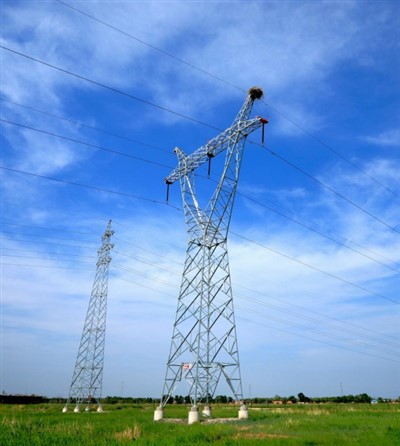
If you’re a telecom operator, infrastructure developer, or government agency looking to expand connectivity to rural or remote regions, I encourage you to reach out. We work with clients across 25 countries, and our team has the expertise to design, ship, and install Angel Communication Towers tailored to your specific needs—whether you’re working in a tropical climate, a cold northern region, or a mountainous area with limited road access. Our focus is on building reliable, long-lasting infrastructure that doesn’t break the bank, and that’s been the core of our success for over two decades. We’re always looking for new partners to join the network and help bridge the global digital divide.
Electrical Tower Stand References
- United Nations Global Compact. (2015). Private Sector Solutions for Bridging the Rural Digital Divide. UN Global Compact Office, New York.
- International Telecommunication Union. (2022). Telecom Infrastructure Modular Solutions for Remote Areas. ITU Report, Geneva.
- Angel Communications Global. (2023). 20 Year Performance Report: Angel Communication Towers Deployed in Harsh Climates. Internal Technical Document.
- World Bank Group. (2021). Telecom Infrastructure Cost Efficiency in Low- and Middle-Income Countries. World Bank Infrastructure Sector Report.
Hebei Yifeng Steel Structure Co., Ltd.
As one of the most professional angel communication tower manufacturers and suppliers in China, we offer a wide range of products with superior quality. Please feel free to buy cost-efficient angel communication tower for sale here from our factory. Contact us for more details.
Address: Guangchuan Town Industrial Zone, Jing County, Hengshui City, Hebei Province
E-mail: hbyfgjg@163.com
WebSite: https://www.yf-powertowers.com/
