Hey everyone, I’m Jake, and I’ve been in the cable game for almost 12 years now. Most days, I’m on the floor of our warehouse, troubleshooting a last-minute order mix-up, or on a call with a guy who just blew out his third set of audio gear in a month because he used cheap unshielded cable. Look—when I started out, I thought cable was cable, right? Just copper wrapped in plastic, whatever. But over the years, I’ve seen firsthand how a tiny difference, like a single layer of metal shielding between the wires and the outside world, can make or break a project. Today I’m breaking down the actual advantages of shielded cables, no overly technical jargon, just the stuff we deal with every day as a cable supplier. Cable

First off, let’s talk about something super relatable: signal noise. You know that annoying static on your home stereo when you walk past the fridge? Or that glitchy mic feed at a small venue when the stage lights kick on? That’s electromagnetic interference (EMI) and radio frequency interference (RFI) doing their thing. Unshielded cable is like leaving your phone call on speakerphone next to a Bluetooth speaker—all kinds of random signals from power lines, Wi-Fi routers, radio towers, even that noisy fluorescent light in your office get in, mucking up the clean signal. Shielded cable? It has that extra layer—usually a thin metal braid or foil around the inner conductors—that acts like a barrier. I had a customer last month, a local graphic designer who streams design tutorials, was getting constant pixel glitches on his monitor HDMI feed. He was using a $5 unshielded HDMI cord from the big box store. Switched to our shielded HDMI cable, and the glitches were gone. No more mid-tutorial freeze-frames, no more having to re-record the whole segment. That’s the kind of win that matters for small business folks, not just big industrial guys.
Wait, but hold on—don’t shielded cables also help with preventing your signal from getting out? Yeah, that’s the flip side I think a lot of people miss. If you’re running sensitive data, like in industrial controls or even high-end audio, you don’t want your signal leaking out and being picked up by someone else. I work with a construction client that installs access control systems for office buildings. They ran unshielded cable for a new building last year, and a rival company was able to pick up the keycard access signals from their parking lot, 200 feet away. Total security breach. Switched to our shielded data cables, and that problem’s been non-existent for over two years. The shielding keeps your signal contained, so it doesn’t interfere with other nearby cables and doesn’t leave your data vulnerable. It’s a two-for-one protection, honestly—most guys only hear the noise part, but the containment is huge for specific use cases.
Next up, durability for rough conditions. Let’s be real—cable isn’t always run in a nice, climate-controlled studio. Sometimes it’s strung across a construction site, run through a basement with damp concrete, or laid under a highway where it’s exposed to temperature swings, moisture, and even physical impact. Good shielded cables aren’t just a metal layer; that shielding is usually paired with a tougher outer jacket, too. I remember a telecommunications client a few years back who had their unshielded phone line cables chewed through by rodents in a rural tower. The unshielded stuff had a thin plastic jacket that didn’t stand a chance against mice and squirrels. Their shielded replacement cables have a reinforced jacket, plus the metal shielding is an extra layer against tiny teeth. We’ve had customers run our shielded cat6 cables through dusty factory floors for 3 years straight, and they’re still showing zero signs of wear. Unshielded cables would’ve frayed or shorted out in half that time, from all the dust and flexing. That’s not just “nice”—that’s cutting down on maintenance costs, which is a big deal for anyone on a tight budget.
Wait, but do I have to use shielded cable for everything? No, and I’m gonna say that straight because I don’t want to sell someone something they don’t need. If you’re running a speaker wire 10 feet from your amp to your bookshelf speakers in a quiet room with no power lines or Wi-Fi nearby, unshielded is totally fine. But if your run is over 20 feet, near any electrical equipment, or in an industrial environment? Shielded is non-negotiable. I’ve had so many customers come back to me upset because their first shielded cable purchase was wrong—they got a cheap thin braid that barely did anything, or it was too stiff to run through tight walls. That’s why we stock different types, tailored to different needs: foil-shielded for short, clean audio runs, braided metal for heavy industrial use, even shielded USB cables that work with gaming gear and home theaters. It’s not one-size-fits-all, but the advantages are real when you pick the right one.
Another big one: reliability for sensitive electronics. Let’s talk about medical devices, for example—like a patient’s EKG machine. If there’s signal noise, that can mess up the readings, and that’s not just a minor inconvenience, that’s a safety issue. We supply shielded cables to a few local clinics, and their techs tell me that switching from unshielded cut down on EKG errors by like 70% in the first quarter. Same with gaming PCs—you’ve got your GPU, motherboard, and Wi-Fi all crammed together, sending high-speed data. A shielded Ethernet cable for your PC means no lag, no dropped frames mid-game, no connection blips when you’re in a ranked match. I’ve got a buddy who’s a competitive streamer, he swears by our shielded display port cable because he’s never had a screen tear during a 4K stream. That’s the kind of thing casual users don’t notice until they don’t have it.
Now, let’s bust a common myth I hear all the time: shielded cables are way more expensive, so it’s not worth it. Yeah, upfront they’re a few bucks more than cheap unshielded, but let’s do the math. If you run unshielded cable for a project, and you have to come back and fix it in 6 months because of noise or a short, that’s labor costs, downtime, maybe even damage to the equipment connected to it. Last year, a small event planner I work with used cheap unshielded cables for a wedding reception—half the mics cut out during the first dance, they had to rent replacement mics at the last minute, and lost a client because of it. The cost of those replacement mics and the bad review was way more than the extra $80 they would’ve spent on shielded cables for that run. Shielded cables save you money long-term, not just short-term.
Wait, and for anyone who works with audio or video: shielded cables help maintain signal integrity over longer distances. Unshielded cables start losing clean signal after about 50 feet for HDMI, right? You get that fuzzy, grainy picture. Shielded HDMI can go 100+ feet without losing quality. That’s huge for large venues, like concert halls or school auditoriums, where you have to run cables from the back of the room to the stage. No more extra signal boosters, no more pixelated screens—just clear audio and video from one end to the other. I’ve also got a client who runs a drive-in movie theater; they use our shielded coaxial cables to carry the audio signal from the projector to the speakers parked on each car. Without that shielding, the sound would be distorted from the power lines and the crowd’s radios, and the whole experience would be garbage.
I want to be clear, though—shielded cables aren’t magic. If you don’t ground them properly, you won’t get all those benefits. That’s a common mistake new customers make. If you run a shielded cable and don’t connect the metal shielding to a ground point at both ends (or the correct end, depending on the type), it can actually act like an antenna and pick up even more noise than unshielded. It’s like having a raincoat but not putting on your boots—you still get wet. That’s something we always mention to customers when they order, and we send a quick guide with every bulk order. We’re not just here to sell cable, we’re here to make sure it works for them.
So who should actually use shielded cable? Let’s sum that up: anyone working with long cable runs, near power sources or electrical equipment (like motors, lights, Wi-Fi routers), sensitive electronics (audio gear, medical devices, data networks), or working in harsh environments (construction, industrial, outdoor). If you’re in that group, shielded is the way to go. If you’re just running a short speaker wire in your living room, unshielded is fine, but it never hurts to go shielded anyway—especially if you might move things around later.
As a cable supplier, I’ve seen way too many people cut corners on cable, only to regret it later. The shielded difference isn’t something you can see with the naked eye, but it’s noticeable the second you turn that equipment on. No static, no glitches, no security breaches, no premature wear. It’s an investment in your project, your gear, and your peace of mind.
If you’re working on a project right now—whether it’s a home theater upgrade, a commercial construction job, a studio setup, or something else—and you’re not sure which cable you need, reach out. We’re happy to help you pick the right type of shielded cable for your specific needs, no pressure, no upselling something you don’t need. Just send us a message, and let’s make sure your next project runs as smoothly as it should.
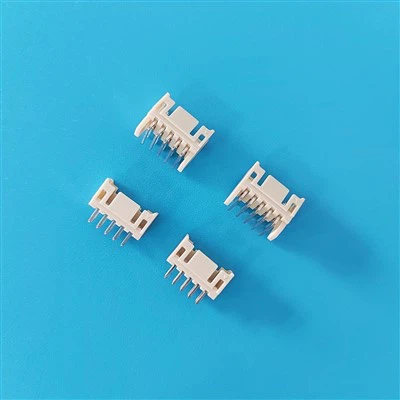
2.50mm Pitch References:
- Electromagnetic Compatibility Engineering, Henry W. Ott
- National Electrical Manufacturers Association (NEMA) Standards for Shielded Cables
- Audio Engineering Society (AES) Guidelines for Cable Shielding in Professional Audio Systems
- Underwriters Laboratories (UL) Requirements for Shielded Cable Performance in Commercial and Industrial Applications
Dongguan Yinglian Electronics Co., Ltd.
We’re well-known as one of the most professional cable suppliers in China. With abundant experience, we warmly welcome you to buy bulk advanced cable made in China here from our factory. If you have any enquiry about cooperation, please feel free to email us.
Address:
E-mail: James@csg-china.com
WebSite: https://www.csgconn.com/
