Hey there! As a gear reduction motor supplier, I’ve seen firsthand how these nifty devices interact with control systems. It’s a pretty fascinating topic, and I’m stoked to share some insights with you. Gear Reduction Motor
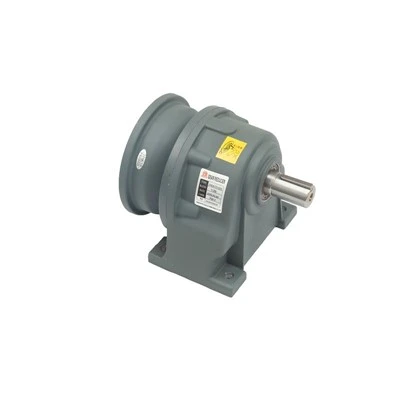
Let’s start off by quickly chatting about what a gear reduction motor is. A gear reduction motor combines an electric motor with a gearbox. The gearbox decreases the motor’s output speed while increasing the torque. This makes it super useful in applications where you need more power to move heavy loads or perform precise movements.
Now, when it comes to how these motors interact with control systems, the first thing to understand is the basic goal. The control system’s job is to manage the motor’s operation, making sure it runs at the right speed, torque, and direction according to the requirements of the application.
One of the most common ways a control system communicates with a gear reduction motor is through electrical signals. These signals tell the motor when to start, stop, speed up, or slow down. For example, in a conveyor belt system, the control system might send a signal to the gear reduction motor to start running the belt at a specific speed when a new item is detected at the loading point.
There are different types of control signals that can be used. One popular option is pulse-width modulation (PWM). PWM is a technique where the control system sends a series of pulses to the motor. By varying the width of these pulses, the system can control the average power delivered to the motor, which in turn controls its speed. It’s like adjusting the amount of gas you give to a car engine to control how fast it goes.
Another important aspect is feedback. A good control system needs to know what the motor is actually doing in real-time. That’s where sensors come in. Encoders are commonly used sensors in gear reduction motor setups. They can measure the motor’s rotational speed, position, and direction. The encoder sends this information back to the control system, which can then make adjustments as needed.
For instance, let’s say you’re using a gear reduction motor to control the movement of a robotic arm. The control system sends a signal for the arm to move to a specific position. The encoder on the motor keeps track of the arm’s actual position. If the arm isn’t reaching the desired position accurately, the control system can adjust the signal sent to the motor to correct the movement.
In some cases, the control system might also need to protect the motor from damage. Overloading the motor can cause it to overheat or burn out. The control system can monitor the motor’s current draw. If the current exceeds a safe level, the system can reduce the power sent to the motor or even shut it down completely. It’s like having a built – in safety net for the motor.
Now, different applications call for different levels of interaction between the gear reduction motor and the control system. In simple on – off applications, the control system might just send a basic start or stop signal. But in more complex applications, like CNC machines or automated manufacturing lines, the interaction can be much more sophisticated.
In a CNC machine, for example, the control system needs to precisely control the speed and position of the cutting tool, which is often powered by a gear reduction motor. The system has to account for factors like the material being cut, the cutting depth, and the feed rate. It continuously adjusts the motor’s operation to achieve the desired results.
When it comes to the types of control systems that can be used with gear reduction motors, there are several options. Programmable logic controllers (PLCs) are very popular. PLCs are industrial computers that can be programmed to control various aspects of a production process. They can handle multiple input signals from sensors and output signals to the motor, making them highly versatile.
Microcontrollers are another option, especially for smaller or more cost – sensitive applications. They’re essentially small computers on a single chip. You can program them to handle the basic control functions of the gear reduction motor. They’re great for DIY projects or small – scale automation.
The communication protocols between the control system and the motor also play a role. Some common protocols include Modbus, CANopen, and Profibus. These protocols ensure that the control system and the motor can understand each other’s signals accurately. It’s like having a common language for them to communicate.
As a gear reduction motor supplier, I’ve seen the importance of getting this interaction right. A well – integrated control system and gear reduction motor can lead to increased efficiency, better performance, and longer motor life. On the other hand, a poor interaction can result in wasted energy, inaccurate movements, and even motor failures.
If you’re in the market for a gear reduction motor, it’s crucial to think about how it will work with your existing or planned control system. You need to make sure that the motor’s specifications are compatible with the control system’s capabilities. For example, if your control system uses a certain communication protocol, the motor should support it.
Also, consider the level of support you’ll need. At our company, we offer technical support to help you integrate our gear reduction motors with your control systems. We can assist with everything from choosing the right motor for your application to troubleshooting any issues that might come up.
Whether you’re working on a large – scale industrial project or a small – scale DIY automation, the interaction between the gear reduction motor and the control system is key. It can make or break the success of your application.
So, if you’re interested in learning more about how our gear reduction motors can work with your control system, or if you’re ready to start a purchase, don’t hesitate to reach out. We’re here to help you find the best solutions for your needs.
Inline Helical Gear Boxes References
- "Motion Control Handbook" by Peter Nachtwey
- "Industrial Automation: Principles and Applications" by Thomas J. Gorman
GuangDong Ruisico Transmission Technology Co., Ltd.
Guangdong Ruisico Transmission Technology Co., Ltd. is one of the most reliable gear reduction motor manufacturers and suppliers in China, also supports customized service. Welcome to buy durable gear reduction motor made in China here and get quotation from our factory. For price consultation, contact us.
Address: No. 70, Anjing Road, Shengfeng Community, Xiaolan Town, Zhongshan City
E-mail: info@risc-drive.com
WebSite: https://www.risc-motor.com/
