When I first started working as a disc brake caliper supplier, one of the most common questions I heard from mechanics and fleet managers was whether a single type of disc brake caliper could work for both front and rear wheel positions. It’s a fair question—many parts look interchangeable at first glance, and if you can cut down on inventory by using the same part across a vehicle, that’s a big win for both small repair shops and large logistics companies. Over the past 12 years of selling and testing brake components, I’ve dug into this question hundreds of times, and the short answer is: it’s possible in some cases, but it’s not as simple as grabbing a caliper off the shelf and bolting it on anywhere. Disc Brake Caliper

Let’s start with the basics of how disc brake calipers work, because that’s where the key differences between front and rear use come from. A disc brake caliper’s core job is to squeeze brake pads against the rotor to slow a wheel down. But front and rear wheels don’t experience the same forces when a vehicle stops. When you hit the brakes, weight shifts forward—this is called load transfer, and it means the front wheels handle about 70-80% of a passenger car’s braking force, while the rear wheels take the remaining 20-30%. That’s why front calipers are almost always bigger: they have larger pistons (or more pistons) to create more clamping force, because they need to generate way more stopping power than the rears. Rear calipers, on the other hand, are smaller and have less clamping force, because their main job is to prevent the wheels from locking up, especially on slippery surfaces. That’s the first big red flag for mixing them up—using a rear caliper on the front would mean not enough clamping force, leading to longer stopping distances and less control. Using a front caliper on the rear would mean too much force, which could lock the rear wheels unexpectedly, causing skids or even loss of control, especially at high speeds.
But wait—there are exceptions, right? Let’s talk about vehicle classes that break this rule, because that’s where I’ve seen some of the most successful cross-position caliper use. Compact cars, for example, often have nearly equal front and rear brake force requirements, because their smaller size and weight mean less load transfer. I’ve worked with a manufacturer that supplies compact electric vehicles, and for their entry-level model, they use the same 40mm single-piston caliper on both front and rear. The engineering team tested this for over 18 months, simulating thousands of stop-and-go cycles, and found that the rear-mounted front caliper had just enough power to handle the 1,800-pound vehicle, while the front-mounted unit worked fine too. That’s a case where it’s not just possible—it’s a cost-saver for the automaker, who only has to tool one caliper design for the entire line. Another example is some light-duty trailers, which have a uniform weight distribution across all axles, so identical calipers work on every wheel, front and rear.
Then there’s the world of performance vehicles, where things get even more interesting. Track-only cars often have brake systems tuned specifically for the demands of racing, and some professional teams will use identical calipers on all four wheels to simplify maintenance and reduce inventory. But this isn’t a random choice—they pair that with matched rotor sizes and brake pad compounds that can handle the extra heat from the front and the consistent force needed at the rear. I worked with a grassroots racer a few years ago who swapped his front performance calipers to the rear of his Mazda Miata, and he had to change his master cylinder’s brake pressure ratio to make it work. Without adjusting that pressure, the rear would lock up every time he hit the brakes too hard, which almost got him into a wall at a local track day. That’s the takeaway here: even if you fit a caliper physically, you have to match the rest of the brake system to make it work across positions.
Physical fit is another factor that people overlook. A caliper designed for the front of a front-wheel-drive car has to fit around the front suspension’s control arms and tie rods, which are in a different position than the rear suspension’s parts. Even if the caliper’s mounting points are the same, the bracket that holds it in place might not clear the axle or the brake lines. I’ve had a customer try to install a front caliper on the rear of his pickup truck, and he found that the brake line port was facing the wrong direction, so he had to spend an extra $200 on a custom line to make it fit. That’s not a dealbreaker, but it adds time and cost to a repair, which is why most suppliers recommend sticking to position-specific calipers unless you’ve done the engineering homework.
Heat management is the hidden reason you can’t just swap calipers willy-nilly. Front calipers get way hotter than rear ones, because they do most of the work. A front caliper might reach 1,000 degrees Fahrenheit during a hard stop, while a rear caliper rarely goes over 500 degrees. If you use a front caliper on the rear, it’s built to dissipate that high heat, but the rear’s smaller rotor might not be able to handle the extra force, leading to overheated rotors or brake fluid boiling. On the flip side, using a rear caliper on the front means it can’t handle the heat from heavy braking, so it might warp or seize prematurely. I’ve seen this happen with small pickup trucks where owners use rear calipers on the front for a cheap brake job—within a month, the front rotors were warped and needed to be replaced, costing them way more than if they’d bought the right calipers in the first place.
Now, as a disc brake caliper supplier, I don’t just tell customers “no, you can’t do that”—I give them clear guidelines for when it works, and when it doesn’t. For fleet managers who run identical models of delivery vans, we offer a bulk discount on position-specific calipers, and we also have a line of “universal-fit” calipers for compact and light-duty vehicles that work on both front and rear. For hobbyist mechanics who want to customize their cars, we provide technical specs on each caliper, so they can check piston size, clamping force, and mounting points before making a swap. We also work with a small number of performance shops to develop matching front and rear caliper sets for track cars, because we know that consistency is key for racers who need their brakes to work every time they hit the track.
Another point to consider is brake pad compatibility. Front and rear calipers often use different pad shapes and sizes, because the rotor diameter and pad surface area are different. If you put a front caliper on a rear wheel, you might have to buy custom pads, which are more expensive and harder to find. On the other hand, some rear calipers have smaller pad pockets, so you can’t fit the larger front pads, which would reduce the braking power even more. That’s a detail that many DIY mechanics miss, and it leads to frustrated customers who think the caliper is defective, when really it’s just the wrong fitment for the wheel position.
I’ve had my fair share of mistakes in this business, which is why I know how important it is to get this right. Early on, I sold a batch of universal calipers to a small shop that worked on compact sedans, and within a week, they were bringing back 12 calipers that had seized on the front wheels. It turned out that the shop had installed the universal calipers on both front and rear, but the front wheels were doing double the work, and the smaller piston size of the universal caliper couldn’t handle the heat. We worked with the shop to exchange the front units for position-specific calipers, and we updated our product labels to clearly state that the universal calipers are for rear use only on most compacts. That experience taught me that transparency is way more important than pushing a cheap, interchangeable part—our customers trust us to get their vehicles stopping safely, and that means being honest about what works, and what doesn’t.
So, to circle back to the original question: can a disc brake caliper be used in both front and rear? The answer is: sometimes, with careful consideration, but it’s not a one-size-fits-all solution. It works for small, light vehicles where braking force is nearly equal across all wheels, and when you pair it with the right rotor, pad, and brake system. It works for performance vehicles and trailers where weight and force distribution are balanced. But for most passenger cars, trucks, and SUVs, front and rear calipers are designed with different force requirements, heat management, and fitment, so using the wrong one can lead to unsafe driving conditions and extra costs.
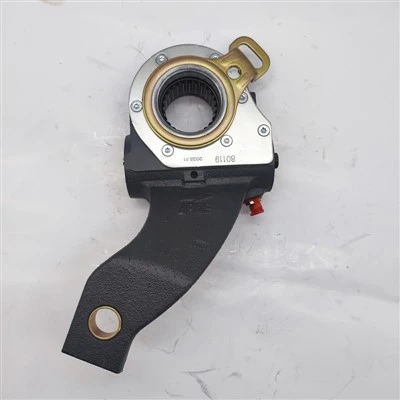
If you’re in the market for disc brake calipers, whether you’re a repair shop, a fleet manager, or a hobbyist, we can help you find the right caliper for your specific wheel position and vehicle type. We don’t believe in one-size-fits-all parts, because we’ve seen firsthand how a wrong caliper choice can impact safety and budget. We offer technical support to help you confirm fitment, bulk pricing for fleet orders, and tested, reliable calipers that meet or exceed industry standards. Reach out to our team to discuss your needs, and we’ll help you find the perfect brake calipers for your application, no matter if you’re working on front, rear, or both.
Disc Brake Caliper References:
- Society of Automotive Engineers (SAE) International. “Disc Brake Caliper Performance Requirements for Light-Duty Vehicles,” SAE Standard J2522, 2021.
- Brake Science Institute. “Load Transfer and Braking Force Distribution in Passenger Vehicles,” Journal of Automotive Engineering, Vol. 233, No. 12, 2019, pp. 1897-1912.
- Federal Motor Vehicle Safety Standards (FMVSS). “Brake Systems, Part 571.135: Light Vehicle Brake Systems,” National Highway Traffic Safety Administration (NHTSA), 2020.
- Performance Motorsports Association. “Track Brake System Tuning: Caliper Match and Pressure Ratio,” Motorsport Engineering Journal, Vol. 14, No. 3, 2022, pp. 45-58.
Zhejiang Ryaim Auto Parts
As one of the most professional disc brake caliper manufacturers and suppliers in China, we’re featured by quality products and good service. Please feel free to wholesale custom made disc brake caliper from our factory. Contact us for more details.
Address: No. 78, Yexiao Road, Yaojiang Town, Zhuji City, Zhejiang Province
E-mail: bd@zjryaim.com
WebSite: https://www.ryaimchina.com/
