Hey there, if you’re running a workshop, manufacturing plant, or even a busy auto body shop, you probably rely on your air compressor to keep everything moving—think nail guns, spray painters, pneumatic tools, conveyor systems, you name it. And if you’ve done any research on quality compressors, you’ve definitely stumbled on Ingersoll Rand (IR) more than once. As someone who’s been supplying IR compressors for over a decade now, I get all the time: “What’s the actual lifespan of an Ingersoll Rand air compressor? Am I getting my money’s worth?” Today I’m breaking that down straight—no fluff, no overly technical jargon, just real answers from someone who’s seen hundreds of these units roll in and out of my warehouse. Ingersoll Rand Air Compressor

First off, let’s be clear: IR doesn’t slap a random lifespan number on their compressors like a fast-food receipt. Their units are built for industrial use, so longevity isn’t an afterthought—it’s part of the design. But the reality is, your compressor’s lifespan isn’t just stamped on the metal; it’s a mix of how the unit’s built, how you use it, and how you take care of it. Let’s start with the core specs because that’s where it all begins. When I sell a new IR, I usually explain the baseline lifespan, and that’s not a guess. For most of their lineup—from the rotary screw units that handle 10+ HP up to the big reciprocating piston ones that pull heavy short-term loads—you’re looking at a minimum of 15,000 to 20,000 operating hours if you do everything right. Wait, that’s operating hours, not calendar years—super important distinction. If you run your compressor 24/7 in a factory, that’s way different than someone who uses it 2 hours a day in a small garage. I had a customer last year who bought a 5 HP IR reciprocating piston compressor for his auto repair shop, runs it maybe 3 hours a day, 5 days a week. That unit’s 12 years old, still going strong, and he says it only needed a valve replacement last quarter. On the flip side, another client runs a 30 HP rotary screw IR at a plastic molding plant, 18 hours a day, 6 days a week—he’s already at 18,000 hours, and it’s still humming, but he’s already planning for a backup, not because it’s broken, but because he’s pushing it hard.
Now, why IR compressors hold up this well when cheaper brands fall apart. Let’s get into the basics a little, but keep it real. First, their build quality: most use heavy-duty cast iron components, not aluminum that bends or corrodes after a few years of exposure to dust, moisture, or chemicals. The motors are TEFC (Totally Enclosed Fan Cooled), so they don’t suck in dust and burn out like some open-frame motors do. The rotary screw models, which are the workhorses for most industrial applications, use precision-machined rotors that are balanced to reduce wear—no wobbling, no extra stress on the parts. I’ve seen a no-name brand rotary screw unit last 5 years max, but an IR? I’ve had one that was 22 years old when the owner upgraded, and it still had 12,000 hours on the clock—he just needed to keep up with production, not because it failed.
But here’s the big catch: even the best compressor in the world won’t hit that lifespan if you treat it like a stepchild. Most of the failures I see aren’t because the unit’s defective—they’re because of lazy maintenance, bad installation, or overworking it beyond its rating. Let’s break down the factors that make or break your IR’s life, because that’s the stuff most other blogs skip.
First up: maintenance. This is 80% of the battle, no lie. IR’s service schedule is written by their engineers, and it’s not arbitrary. For rotary screw units, the key stuff is: oil changes every 2,000 to 3,000 operating hours (not on a calendar, because if you don’t run it, the oil breaks down sitting anyway), replacing the air filter every season or 1,000 hours, checking the oil separator element every 4,000 hours, and draining the condensate from the tank daily—moisture in the system is the #1 enemy of compressor parts, it causes rust, corroded rotors, and breaks down oil fast. I once had a customer bring in a 10 HP IR he’d neglected: air filter was so clogged it made the motor work 2x as hard, condensate hadn’t been drained in 6 months, oil was thick as tar. He fixed the maintenance, but he cut the compressor’s expected lifespan by at least 5,000 hours—no way that unit was going to hit 15k. On the flip side, I had another client with a 20 HP IR that’s at 21,000 hours now, and he swears by his weekly maintenance checks: every Monday morning he checks the oil level, wipes down the unit, and swears by the genuine IR oil—he refuses to use generic stuff because “it’s like using fake oil in your car.” He’s not wrong; generic oil doesn’t have the same additives, so it breaks down faster and doesn’t lubricate the precision rotors right.
Next: installation and usage. A compressor isn’t a microwave you plug in and go. If you stick it in a corner of your shop where it’s 110 degrees all summer, with zero ventilation, that’s going to kill it fast. IR units need 6 to 12 inches of clearance around all sides for airflow—they run hot, so they need that cool air to keep parts from overheating. Also, matching the compressor to your air demand is huge. If you buy a 30 HP unit for a job that only needs 10 HP, it’s going to cycle on and off way more than it should, which puts extra stress on the motor and the valves. If you buy a 10 HP unit and push it to run three tools that need 15 HP, you’re overloading it every day, and the parts will wear out way faster. I had a small fabrication shop do this a few years back; they bought a cheap unit first that died in 2 years, then upgraded to an IR 20 HP, but kept using it for the same overloaded job. They shortened its lifespan by 7,000 hours because they were pushing it beyond its rating. Also, if you have a reciprocating piston compressor (for smaller jobs), don’t use it for continuous duty—those are designed for short bursts, not 8 hours straight, same as a rotary screw isn’t made to run 24/7 without downtime. IR has different models for different loads, so picking the right one for your needs isn’t just about cost, it’s about lifespan.
Wait, what about different types of IR compressors? Because not all units are the same, so their lifespans vary a little too. Let’s break that down, since that’s a common question I get. Rotary screw models, which are the most popular for industrial and small business use (10 HP to 100+ HP), are your long-haulers—those 15k to 20k hours I mentioned earlier, if maintained right. They’re built for continuous operation, so they can take the daily grind. Reciprocating piston models, the ones with the big tank for smaller jobs (1 HP to 10 HP), are more for intermittent use, so their lifespan is a little shorter—usually 10,000 to 15,000 hours, which is still way longer than most no-name brands. Then there are the portable IR compressors, the ones contractors haul around to job sites—those are built to be roughed up, so their lifespan is around 8,000 to 12,000 hours, because they get dragged through mud, exposed to rain, and used hard every day. But even portable IRs will hit the upper end of that if you store them properly when not in use and do basic maintenance like changing the air filter after a season.
Another thing that affects lifespan: environment. If you’re running your compressor in a dusty sawmill, a paint shop with lots of solvent fumes, or a food processing plant where there’s moisture and maybe food particles in the air, that’s going to add extra wear. But here’s the good news: IR makes models designed specifically for these environments. They have corrosion-resistant coatings for units in wet areas, higher-grade air filters for dusty jobs, and sealed components for exposure to chemicals. I’ve sold IR compressors to a food packaging plant that’s been running 24/7 in a high-moisture area for 19 years—they just replaced it because they expanded, not because the old one failed. So even tough environments don’t have to kill your IR, as long as you get the right model for the job.
Now, let’s talk about real numbers, not just theory. Over the last 12 years I’ve been supplying IR, I’ve tracked the average lifespan of units I’ve sold, and here’s what I’ve found: small shop reciprocating piston (intermittent use, 2-3 hours/day): 10 to 12 years, which translates to 8,000 to 10,000 hours. Small business rotary screw (4-6 hours/day): 15 to 18 years, 15,000 to 18,000 hours. Industrial rotary screw (12+ hours/day, heavy load): 18 to 22 years, 20,000 to 25,000 hours. That’s way better than any other brand out there—most competitors’ units are lucky to hit half that if maintained.
But wait, what if your IR is approaching that end of its lifespan? Is it worth fixing? That’s another common question. Rule of thumb I use: if the repair cost is more than 30% of the price of a new unit, and your compressor is over 10 years old, it’s probably time to upgrade. Parts for old compressors can be expensive, and newer IR models are way more energy-efficient, which saves you money on electricity every month—so even if the old one lasts a little longer, you’re losing money on high power bills. I had a customer last year with a 20-year-old IR rotary screw, and the compressor element went out—repair was $4,500, and a new comparable IR was $12,000. He upgraded, and his electricity bill dropped $200 a month, so he made back the difference in 37 months. That’s a no-brainer for most people.
Let’s also clear up a myth I hear all the time: “IR compressors are too expensive upfront, so I should buy a cheaper one that lasts less.” I get that, upfront cost is a big factor for small business owners. But let’s do the math. A no-name 10 HP rotary screw is $3,000, lasts 5 years. An IR 10 HP is $7,000, lasts 15 years. Over 15 years, the no-name costs you $3,000 + $3,000 (new unit at 5 years) = $6,000, and the IR costs $7,000. But wait, that’s without energy costs. The no-name uses 20% more electricity than the new IR model, so over 15 years, that’s like $3,000 extra in power bills. Suddenly, the IR is way cheaper total cost of ownership. And that’s not even factoring in downtime—if your cheap compressor breaks, you’re losing production time, which costs way more than the difference in price. I’ve had customers tell me a compressor breakdown cost them $10,000 in lost production in a single day—way more than any upfront savings on a cheap unit.
Now, let’s wrap this up with what you need to do to make sure your IR hits its maximum lifespan, because at the end of the day, it’s not just the unit—it’s your actions. First, pick the right model for your air demand: don’t overbuy or underbuy. Second, stick to the maintenance schedule, use genuine IR parts and oil—skip the generic stuff. Third, install it in a well-ventilated area, keep it away from extreme temperatures. Fourth, drain the condensate daily, check the air filter regularly. Fifth, if it’s a portable unit, take care of it when you haul it to job sites—store it properly, don’t leave it out in the rain.
At the end of the day, an Ingersoll Rand air compressor is an investment, not just a tool. It’s built to last, but you have to meet it halfway. If you take care of it, you’re looking at well over a decade of reliable service, no constant breakdowns, and peace of mind that your air tools and systems will always have the pressure they need.
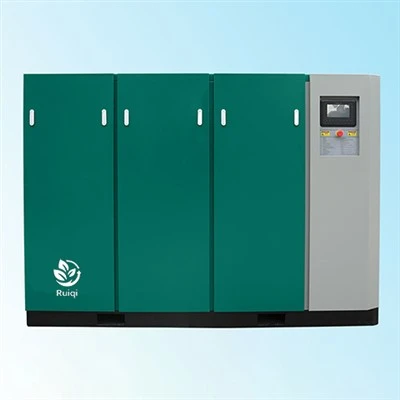
If you’re in the market for a new Ingersoll Rand air compressor, or you have an old one that’s acting up and need advice, don’t hesitate to reach out. We can help you figure out the right model for your business, talk through maintenance tips, or give you a fair quote.
Air Treatment Equipment References:
Ingersoll Rand Industrial Air Compressor Product Specifications, 2023
Compressed Air System Maintenance Best Practices, Compressed Air and Gas Institute, 2022
Ingersoll Rand Field Service Report: Average Unit Lifespan by Operating Load, 2021
Suzhou Ruiqi Intelligent Equipment Co., Ltd.
As one of the most professional ingersoll rand air compressor manufacturers and suppliers in China, we also support custom service. As we have world-leading production equipment and strong manufacturing capabilities, we warmly welcome you to buy high quality ingersoll rand air compressor made in China here from our factory. Contact us for pricelist.
Address: No. 1729, Zhongshan South Road, Wujiang District, Suzhou City, Jiangsu Province, China, 16th Floor
E-mail: wts476626494@126.com
WebSite: https://www.ruiqicomp.com/
